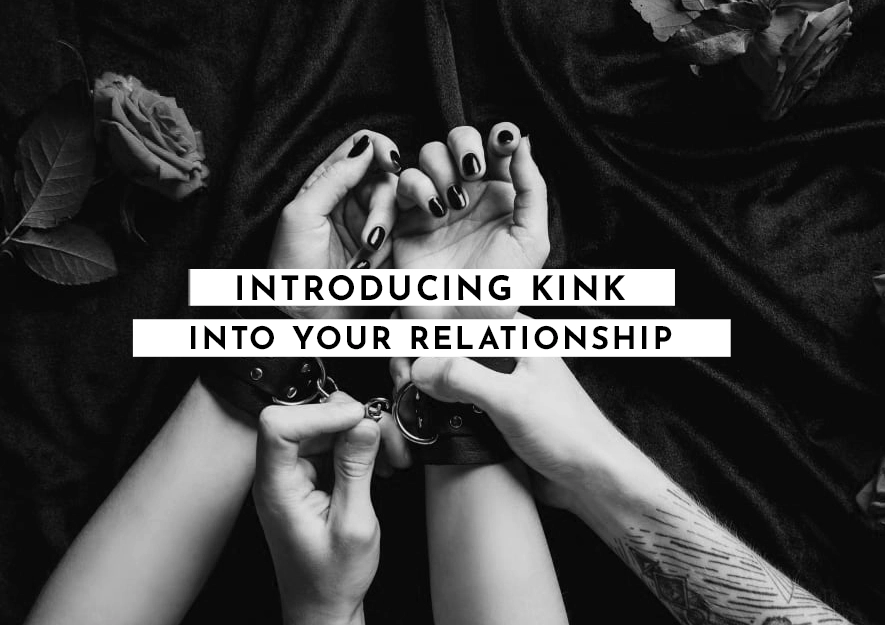
There is a conversation that happens in the privacy of people’s minds long before it ever reaches their relationships.
A curiosity. A fantasy. Something they have been carrying quietly — sometimes for years — without the language to name it or the safety to say it out loud. And the longer it stays unspoken, the more it begins to feel like something is wrong with them for having it.
There is nothing wrong with you.
What you are experiencing is an erotic impulse — one that is far more common than the silence around it suggests. And the fact that it has stayed silent is not evidence of its wrongness. It is evidence of how little permission most people have been given to know themselves fully in this dimension.
This article is about changing that.
“MOI Coaching provides professional relationship and wellness coaching, not clinical mental health treatment or therapy.”
What kink actually is — and what it is not

Kink is an umbrella term for sexual interests, practices, or dynamics that fall outside conventional sexual scripts. It includes a wide spectrum — from light role play and power exchange to sensation play, bondage, discipline, dominance, submission, sadism, and masochism (often referred to as BDSM).
What it is not: a pathology, a disorder, or evidence of trauma.
Research consistently shows that people who engage in consensual kink report higher levels of sexual satisfaction, communication quality, and relationship trust than those who do not. A landmark study published in the Journal of Sexual Medicine found that practitioners of BDSM scored significantly higher on measures of subjective wellbeing, openness, and conscientiousness than non-practitioners.
Kink is not what is wrong with your relationship. In many cases, the absence of honest erotic conversation is.

Why people hesitate — and what is actually happening underneath
The hesitation is almost never about the kink itself. It is about the fear of what the disclosure will do to how the other person sees you.
“What if they think I am broken?”
“What if this changes how they feel about me?”
“What if I lose the relationship because of something I cannot stop wanting?”
These fears are not irrational. They are the product of a culture that has taught most people to hide their erotic interior — to present a sanitized, acceptable version of their desire while keeping the rest locked away.
The cost of that hiding is significant. When desire has no honest expression, it does not disappear. It goes underground — creating distance, resentment, and the particular loneliness of being physically present with someone while keeping a whole dimension of yourself invisible.
Introducing kink into your relationship or your individual erotic life is, at its core, an act of self-disclosure. And self-disclosure — honest, boundaried, respectful — is the foundation of genuine intimacy.
How to begin — individually

Before you bring any erotic interest to a partner, it is worth spending time with it yourself.
Know what you are drawn to and why.
Not every curiosity needs a psychological explanation — but understanding what specifically appeals to you, what feeling or dynamic it creates, and what need it might be meeting is valuable preparation for the conversation you will eventually have. Journaling, reading, and self-reflection are all useful here.
Distinguish fantasy from desire.
Some erotic interests are deeply meaningful and deserve expression. Others are enjoyable in imagination and do not require enactment. Both are valid. Knowing which category your interest falls into helps you communicate with greater precision and avoids the confusion that comes from conflating the two.

Release the shame before the conversation.
Shame is not information about whether your desire is acceptable. It is a learned response — often formed in environments where sexuality was treated as dangerous, sinful, or dirty. Working with shame before you bring an erotic interest to a partner means the conversation can happen from a place of clarity rather than anxiety.
How to begin — in a relationship
Start with curiosity, not a request.
The least pressurized way to open the conversation is with a question rather than a disclosure. “Is there anything you have been curious about that we have never tried?” creates an opening that invites rather than demands. It makes space for the other person to bring something before you do — and it signals that the conversation is safe.

Use a yes / no / maybe list.
This is one of the most practical tools available for couples exploring new erotic territory. Each partner independently reviews a list of practices and marks each as yes (interested), no (not interested), or maybe (curious but uncertain). Comparing lists shows overlap, opens conversation, and removes the vulnerability of one person disclosing into silence.
Separate the conversation from the bedroom.
Erotic conversations have the most productive outcomes when they happen outside of sexual context — when neither partner is in a state of arousal or expectation. A relaxed, neutral environment reduces the pressure that makes these conversations collapse into performance rather than genuine exchange.
Negotiate before you explore.
Consensual kink requires explicit conversation about boundaries, safety signals, and limits before any practice begins. This is not bureaucracy — it is the foundation on which trust is built. The negotiation is itself an intimate act.
What changes when you begin

Most people who begin honest erotic conversations with themselves and their partners report the same thing: the conversation they feared most became one of the most connecting experiences of their relationship.
Not because everything aligned perfectly. But because the act of being known — fully, honestly, without the performance — is what genuine intimacy actually is.
Your erotic interior is not a problem to be managed. It is a dimension of you that deserves the same honest attention you bring to every other part of your life.
That is where this work begins.
If this resonates and you are ready to explore your erotic alignment within a structured, confidential coaching framework — the intake form is the first step.
Read more in the MOI Coaching free resources library: https://moicoach.com/category/erotic-alignment/
Reconnect with your desires, boundaries, and inner authority, and stop shrinking to keep connection.
Learn More →Build emotional fluency, presence, and relational confidence without losing your edge.
Learn More →Move out of repeating cycles and into a partnership that’s conscious, connected, and chosen.
Learn More →